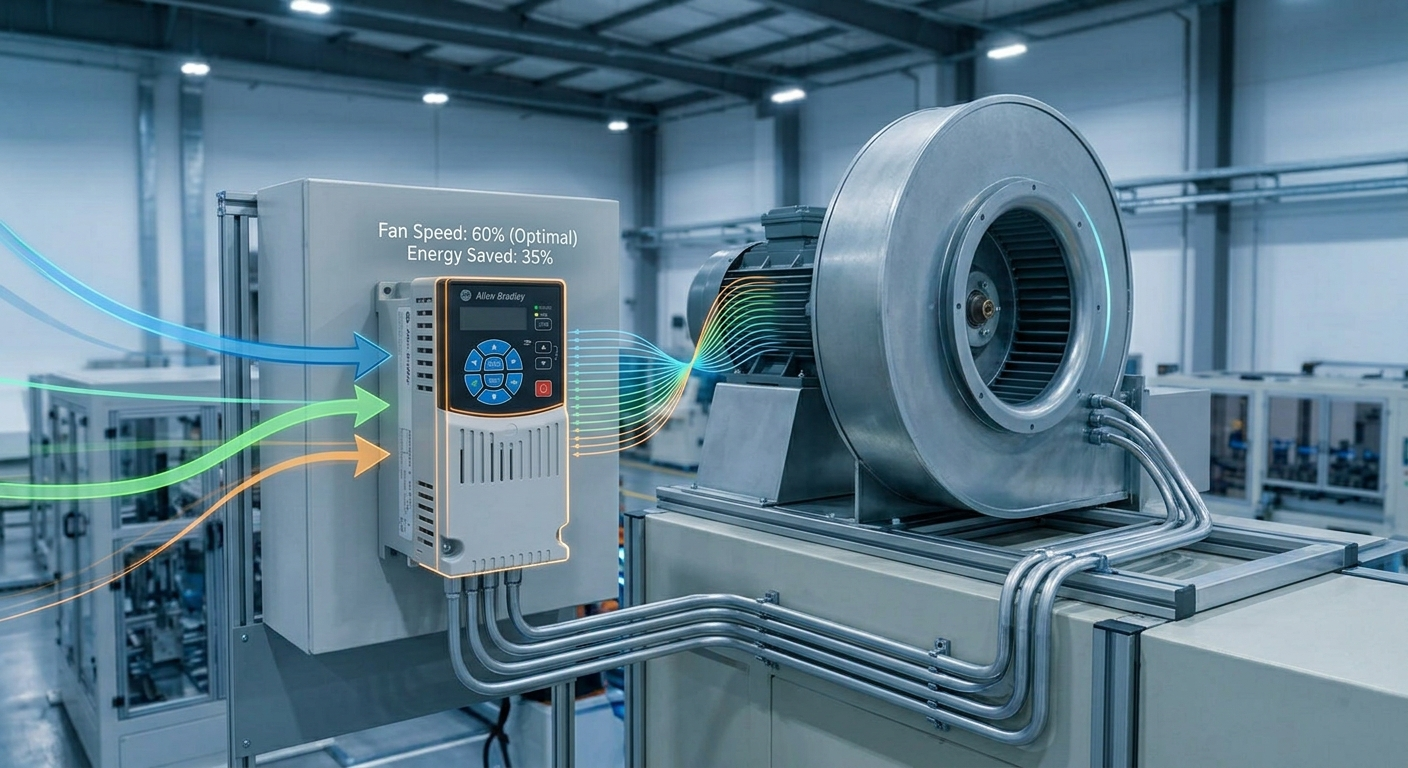
A variable frequency drive is used when an AC motor needs controlled starting, stopping, speed, or torque instead of a simple full-voltage starter. VFDs are common on conveyors, pumps, fans, mixers, compressors, and material-handling equipment.
Common applications
- Conveyors that need speed matching or controlled acceleration
- Pumps and fans where process demand changes
- Mixers and material-handling equipment requiring adjustable speed
- Machines that need repeatable ramping and stopping
Why use a VFD
A drive can reduce mechanical shock, provide speed control, report current and fault status, and simplify coordination with a PLC. In some variable-torque applications, reducing speed can also reduce energy demand, but the actual result depends on the equipment and process.
Control methods
The PLC may command a drive through digital I/O, an analog reference, or an industrial network. The selected method must match the drive configuration and the machine’s feedback and permissive design. A run bit is not enough if the drive is in local mode, disabled, faulted, or missing safe enable.
Selection and commissioning
Motor voltage, full-load current, duty, overload needs, enclosure conditions, braking, acceleration, and load inertia all matter. Commissioning should verify rotation, ramp behavior, stop behavior, fault handling, communication loss, and recovery.
For a basic explanation, see What is a VFD?. TechControl provides VFD programming and troubleshooting for existing industrial applications.
Ready to bring your project to life?
Contact Us