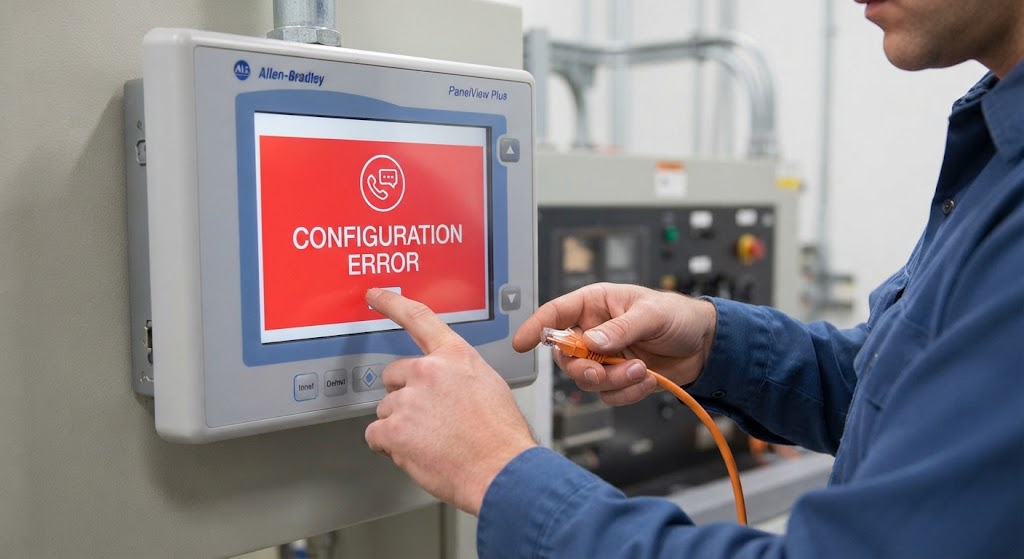
PLC programming and PLC configuration are related, but they are not the same job. Programming defines how a machine behaves. Configuration tells the controller what hardware, networks, tasks, and devices exist so that the program can communicate with them correctly.
What PLC programming includes
Programming covers sequence logic, interlocks, permissives, timers, counters, alarms, recipes, state machines, and fault recovery. A programmer may also create routines, user-defined data structures, HMI tags, and diagnostic messages. The result is the control behavior that turns inputs into safe, useful outputs.
What PLC configuration includes
Configuration includes selecting the controller, adding I/O modules, setting module properties, defining Ethernet addresses, assigning tasks and programs, mapping produced or consumed data, and establishing device paths. A drive or remote I/O adapter can be wired correctly and still fail if its project configuration does not match the actual device.
Why the distinction matters
A machine can have valid logic but an incorrect module address. It can also have perfect hardware configuration but incomplete sequence logic. Troubleshooting becomes faster when the team asks whether the problem is in the program, the configured device, the physical installation, or the network between them.
Example: adding a conveyor drive
- Configure the drive or adapter and its network identity.
- Define command, reference, status, and fault data.
- Write permissive and sequence logic.
- Map HMI commands and diagnostics.
- Test start, stop, fault, loss of communication, and recovery behavior.
Practical recommendations
Keep a hardware list, network plan, I/O map, program backup, and change record together. Configuration changes should be reviewed with the running machine in mind. Programming changes should be tested against real feedback and failure conditions rather than only a normal cycle.
TechControl supports PLC programming, control-system configuration, and commissioning for existing industrial equipment. For the fundamentals, read What is a PLC? and PLC programming basics.
Ready to bring your project to life?
Contact Us